Three patches of fresh plaster marked the courtyard wall at Chris’s home. But the largest crack crossed the repairs and ran all the way inside. A piece of wood propped up a table leg. The vase had been moved to a corner. His sister’s cloth rabbit sat on an empty chair.
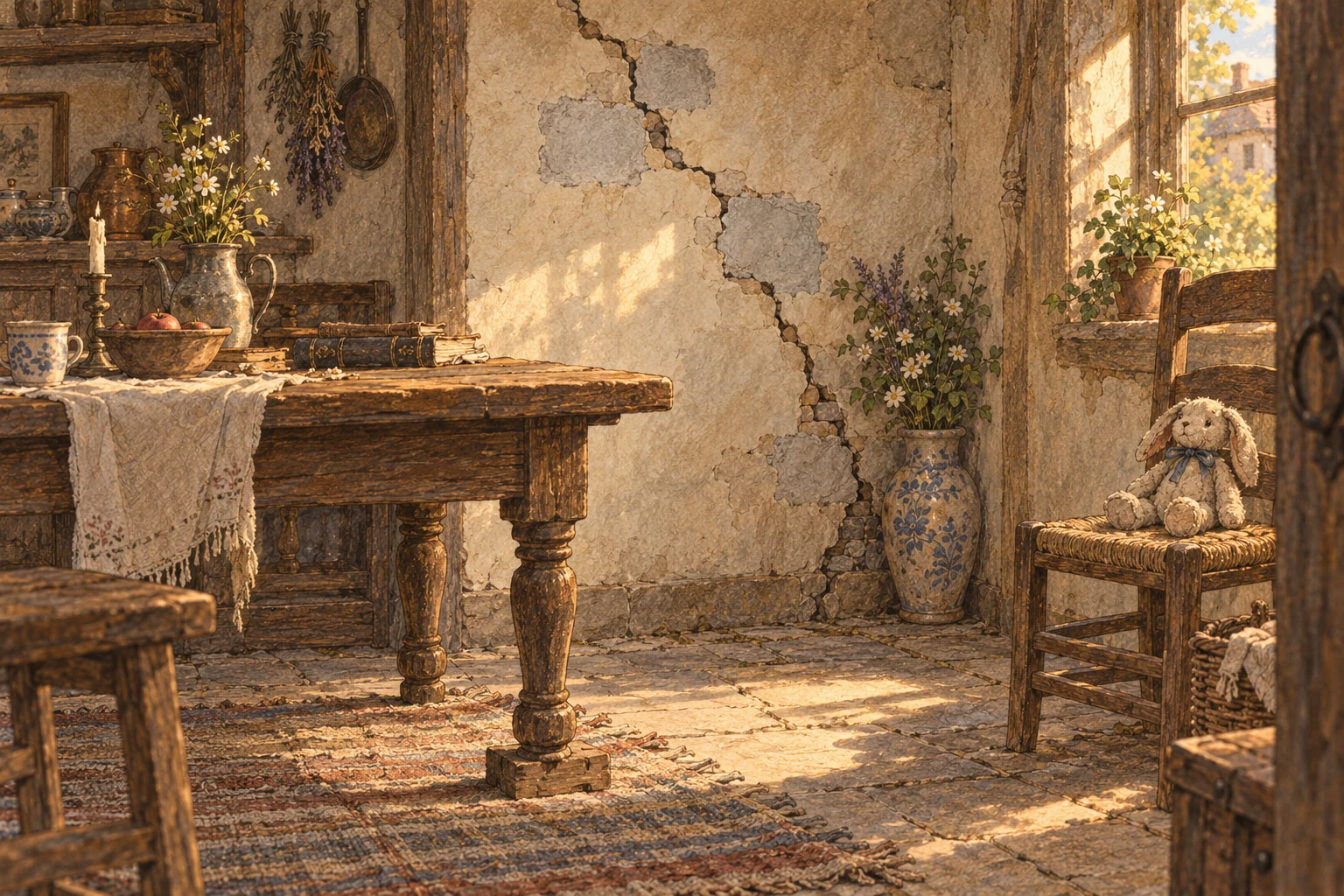
When his mother saw him, the cloth in her hands fell to the floor. She came over and held him for a long time. Chris had prepared words all the way home, but could not say even one. He simply leaned his face against her shoulder and heard her say his name again and again.

His sister ran from the back room and caught his clothes. “You really came back!” She looked behind him. “Where’s the bundle?”
Chris crouched beside her. First he told her that he had broken the bowl, then said he was sorry. His sister looked down. After a while she whispered, “I was very upset that day.” He nodded and waited for her to finish, without hurrying her to forgive him.
His father stood beside the table, looking unwell. Chris’s second letter lay by his hand. “I read it,” he said. “I thought once the wall was fixed, you could come home.”
“It isn’t only our wall now,” Chris said.
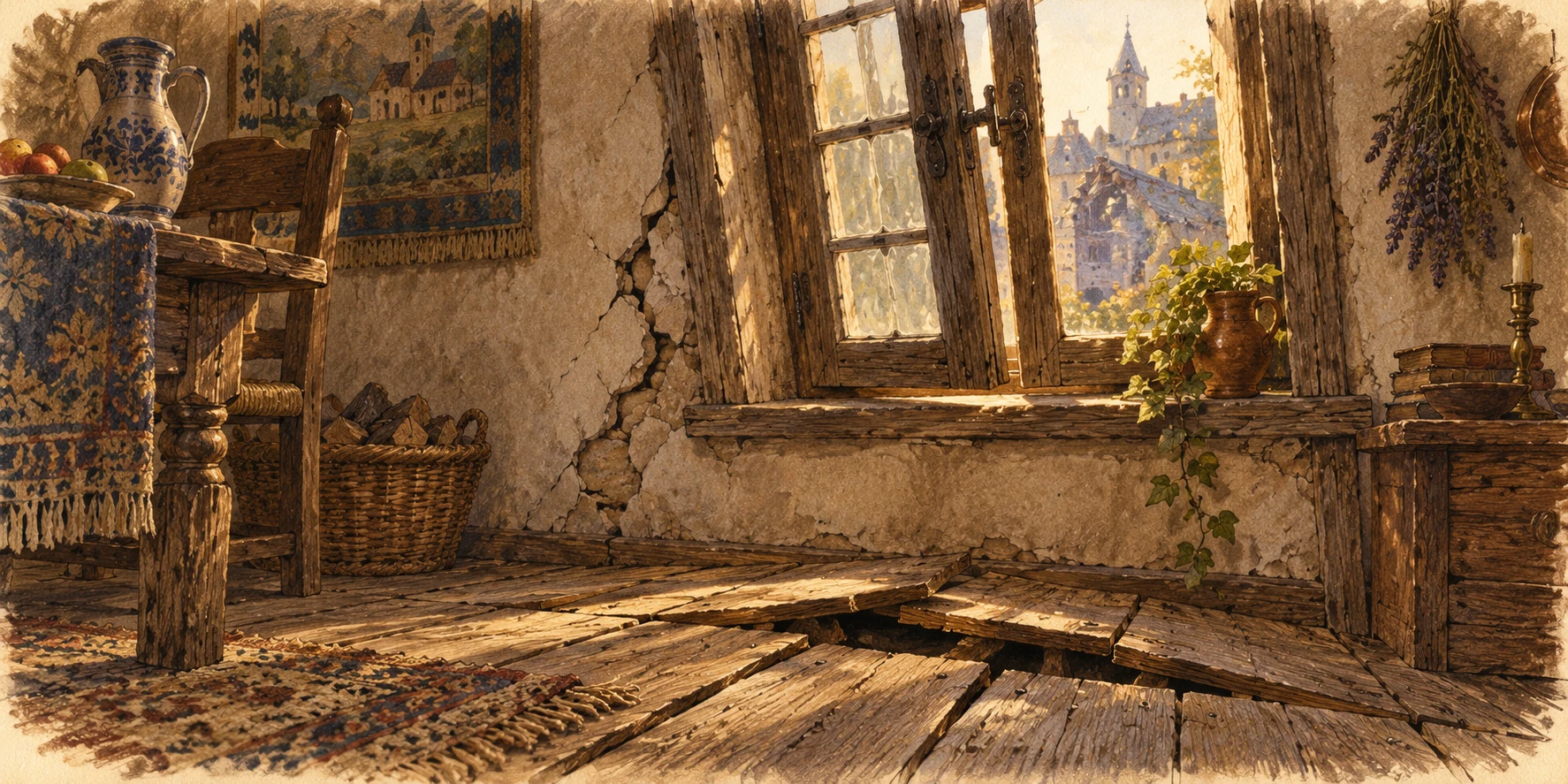
His father was quiet for a while, then took him to see the back room. The floor had buckled, and the window would not close. A few days earlier, half a neighbor’s house had fallen. His father had seen it, but still come home and told his mother not to worry. “I was afraid that once I admitted it, I would have to leave,” he said. “The shop, and everything I’ve saved…”
Chris did not answer, “I told you so.” He took out the map and showed his father where they could get water and where people would welcome them. Then he invited Watchful inside so an adult could explain the changes they could see outside the city.
As Watchful spoke, a faint cracking sound came from the room. Chris’s mother pulled his sister closer without thinking. His father looked toward the crack reaching the doorframe. This time, neither turned back to the jewelry or the moneybags.
“We have to leave,” his mother said.
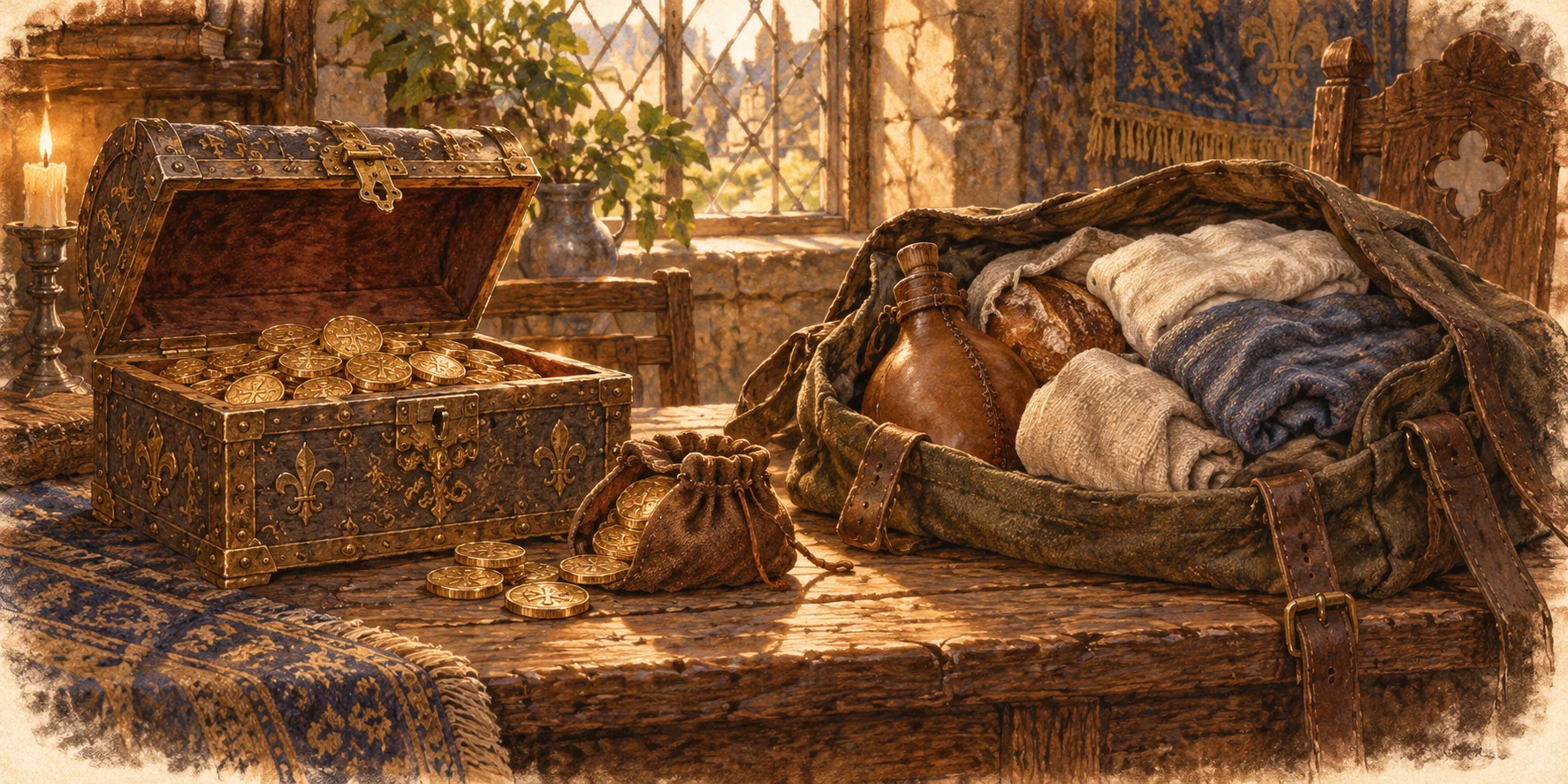
His father did not argue again. But he brought out a heavy box of gold coins. Looking at it, Chris remembered the silver mine entrance. “We need water for my sister, and things we can travel with,” he said. “Who can carry something that heavy all the way?”
His father set down the box. He chose a small bag of money they might need on the road and packed food and clothes instead. Opening the drawer, he touched the letter and suddenly stopped. “When you asked me to look at the wall, I should have gone,” he said.
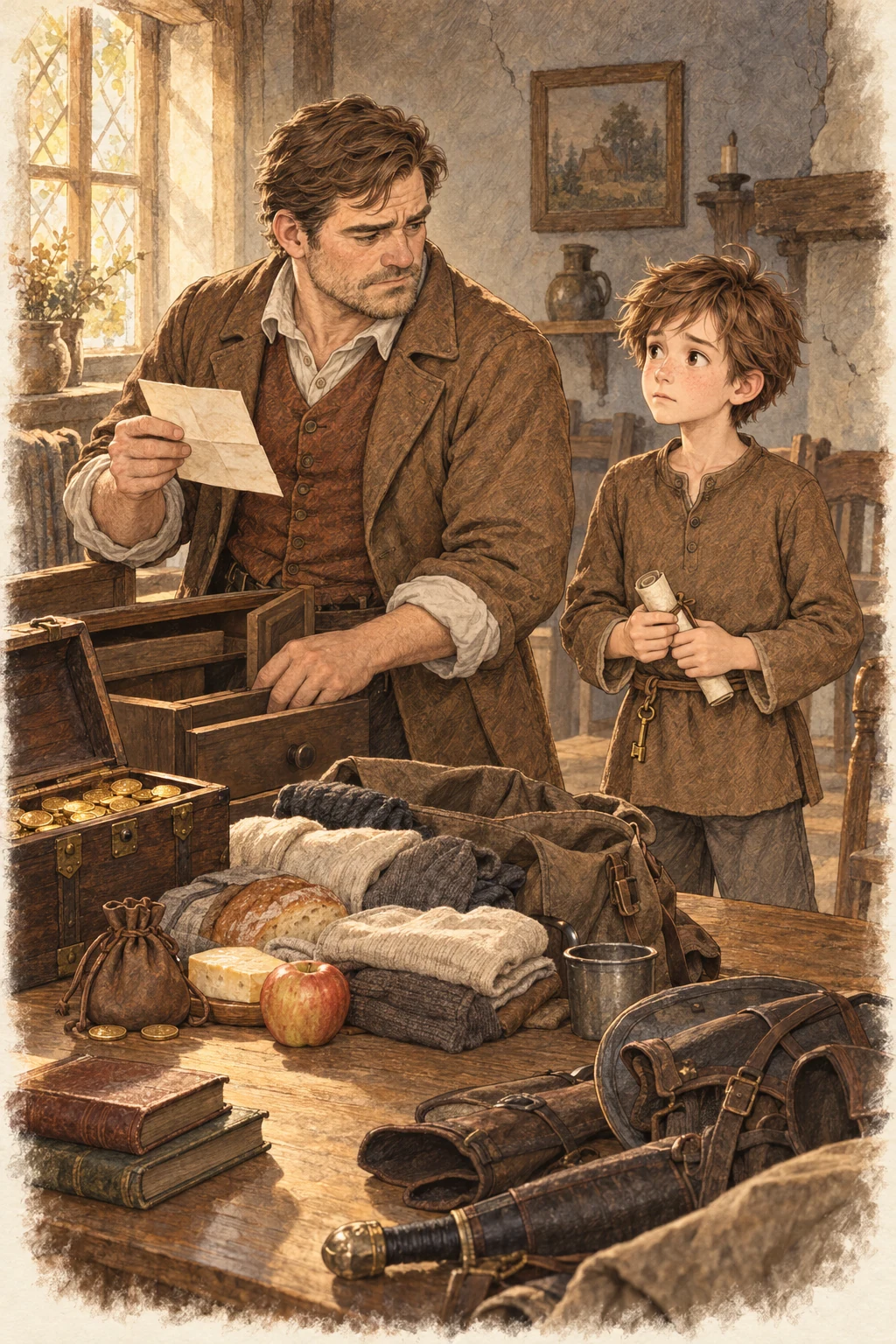
Chris lifted his head. This time, his father’s eyes did not pass him by to search for coins on the table. “Having done things wrong doesn’t mean that nothing you say is worth listening to.”
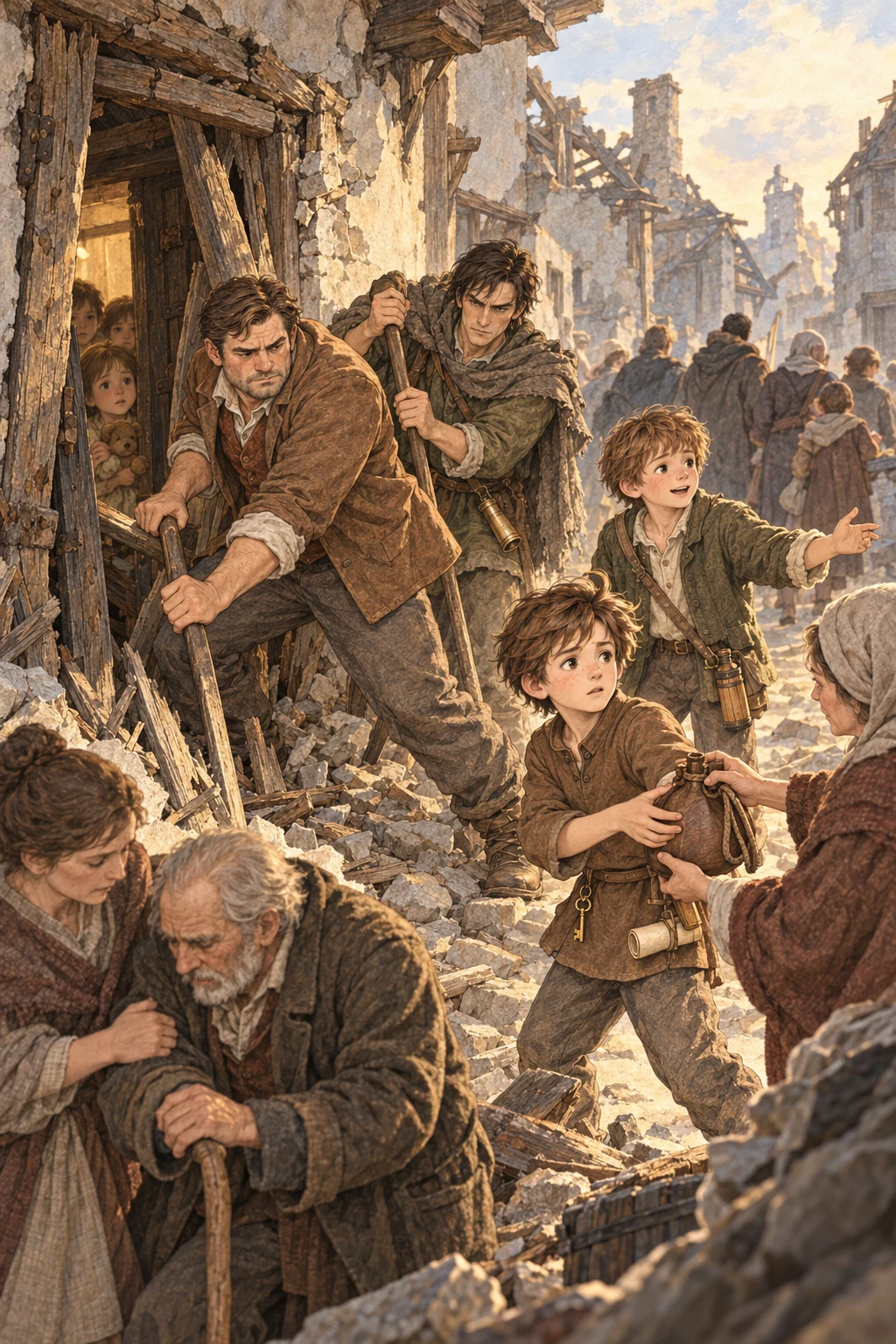
When they had packed, they knocked on their neighbors’ doors. Some came out at once. Some wanted to collect their money first. Others said they would not leave even if the sky fell. Chris’s mother described the floor she had seen with her own eyes. His father checked whether any elderly people inside could not walk. Chris and Hopeful led those willing to leave to the end of the street.
At one house, the crooked frame had jammed the door. A child was crying inside. Watchful and Chris’s father found tools and opened it together. Chris took the family’s waterskins so they could help an older person out first. At last he was no longer standing at every door waiting for people to admit he was right. He began doing what was needed in front of him.
As the group reached the city gate, the rumbling came again from underground. This time, nobody covered it with music. Chris’s father tied the last bag onto the wagon and turned to take his wife’s and daughter’s hands. Chris walked a little ahead, looking back now and then to make sure his family were still following.