The lights of the City of Destruction shone from morning until late at night.
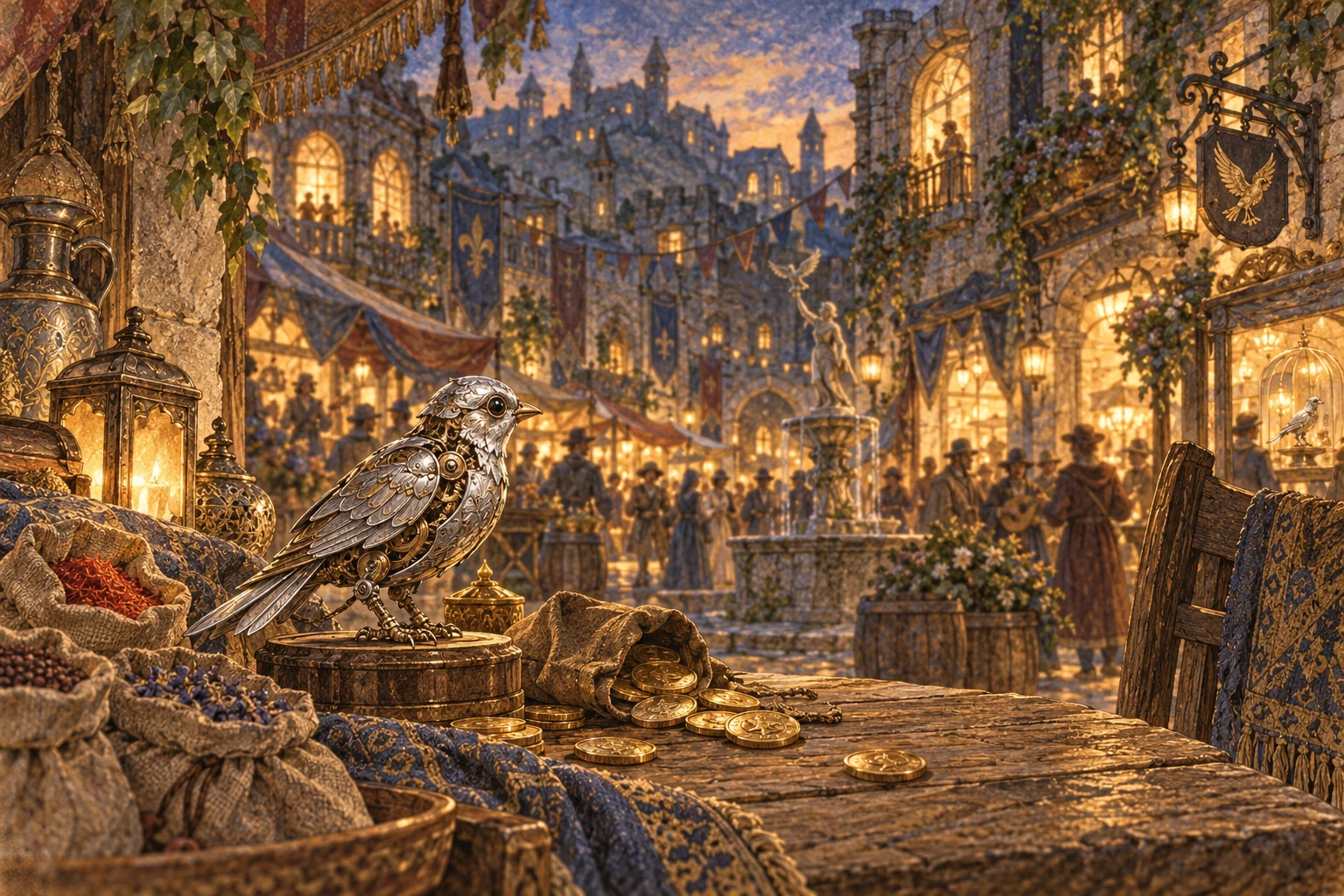
The people who lived there did not like to mention its name. They had too many pleasant things to talk about: newly opened shops, spices just brought into town, silver birds that sang at parties, and the gold coins that filled their pockets a little more each day. The coins clinked together. That sound went on from morning until night.
Chris lived in the southern part of the city. He was eleven years old, thin, with a few strands of hair at the front that stuck up no matter how often he pressed them down. His old brown clothes had patches at the elbows, and his sleeves were a little too short. He often looked down when he spoke to people. But once he had made up his mind, a stubborn look would appear on his young face.
Recently, he had begun reading an old book. One sentence in it had kept him awake for several nights: one day, this city would be destroyed. At first he thought he had read it wrong, so he went over the line again, word by word. Farther on, the book spoke of another city, one that would never be destroyed. A King lived there who was willing to help anyone who came to him for rescue.
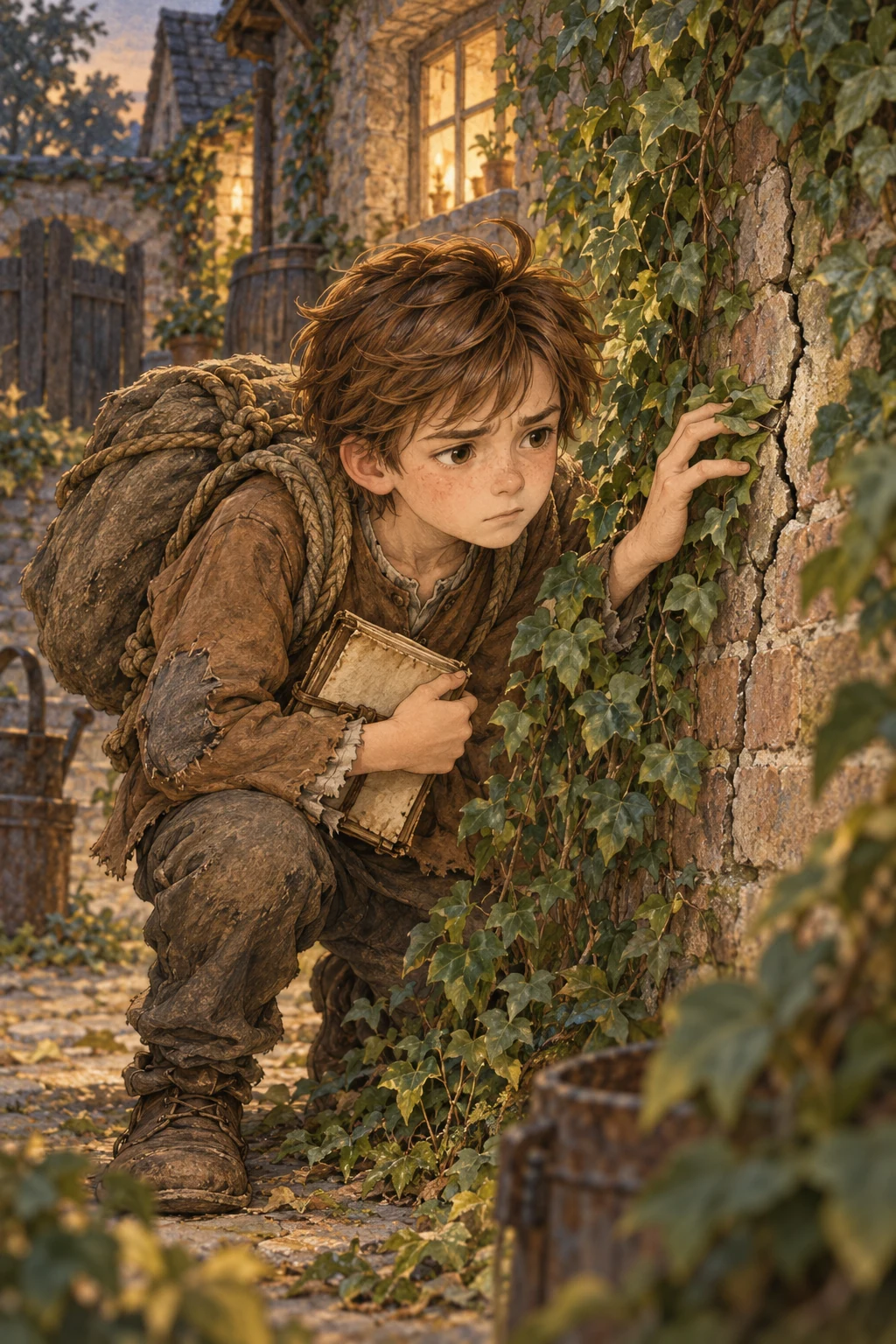
Chris closed the book. Outside his window, the lights were dazzling, and laughter rose from the streets again and again. But the next day he found a crack in the courtyard wall. Hidden behind the leaves that covered the wall, it was as thin as a black thread. He pushed the leaves aside and laid his fingers against it. A little warmth came from inside. By evening, the crack had reached the space beneath the windowsill.
“Dad, come and look.” Chris went over to the table. His father was counting gold coins, setting them neatly aside in piles of ten.
“There’s a crack in the wall,” Chris said. “And the book says this city—”
“What book?” his father asked, his finger still resting on a coin.
Chris handed him the book. His father glanced at its yellowed pages. “Old books like this are always making things sound frightening. We’ve lived here for years. The house is fine, and so is the business.” A gold coin rolled off the edge of the table. Chris bent down, picked it up, and put it back into his father’s hand.
“But the crack is getting longer.”
“We’ll get someone to patch it tomorrow. Now, where was I?”
His mother was choosing a necklace for that evening’s party. Several gold coins lay beside her jewelry box as well. Chris went to her. “Mom, we have to do something.”
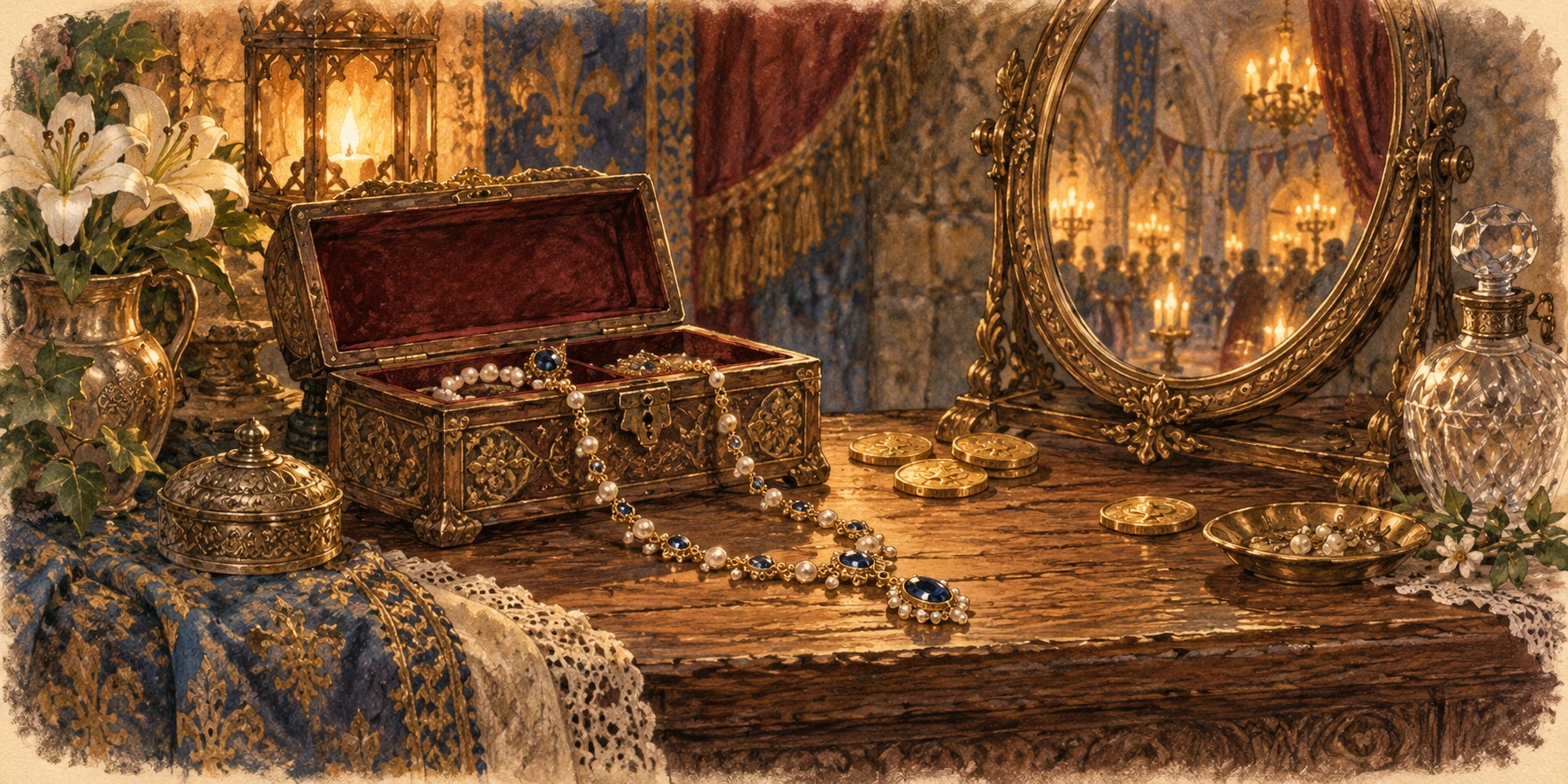
She pressed down the hair that stuck up on his head, then turned back to the mirror. “Wash your face first. There’ll be honey cakes tonight. Stop looking so worried.” He opened his mouth, but she had already changed the necklace in the mirror for another one.
That evening, Chris tried talking to the neighbors and the people in the street. The cloth seller worried that he was getting in the customers’ way. The clock seller said children should not believe old tales. A few people buying sweets laughed. “If the city really is going to be destroyed, tell it to stop making money first!”
Chris went home with the book in his arms. Maybe I’ve got it wrong, he thought. He knew that thought very well. Once, when he had broken a bowl, he had said his little sister had knocked it down. When others laughed at a child who stammered, he had laughed too. Another time, he had promised to help his mother carry something, then become so busy playing that he had forgotten all about it.
People did not bring up those things every day. But he remembered. Sometimes, just as he was about to speak, he would think of the faces of the people he had hurt. Then he would wonder why anyone should believe him when he could not even get his own small tasks right.
It was also when he began reading that book that he discovered a great bundle on his back. It was wrapped in coarse cloth, and its ropes dug into his shoulders. He did not know how much was inside. All he knew was that whenever he remembered a wrong he would not admit, the ropes seemed to tighten a little more.
He tried to lift the bundle off, but it would not move. Then he leaned against the wall, hoping to rub the knot loose. Dust fell down his collar, but the knot stayed fast. His mother called him to come and eat a honey cake. He took a bite. The sweetness filled his mouth, but it did nothing to lighten his back.
Late that night, the music in the streets was still playing. Chris heard a low rumbling underground. The water in a cup by the window trembled gently. He went into the courtyard and found that the crack behind the green leaves was now wide enough to put his little finger into.
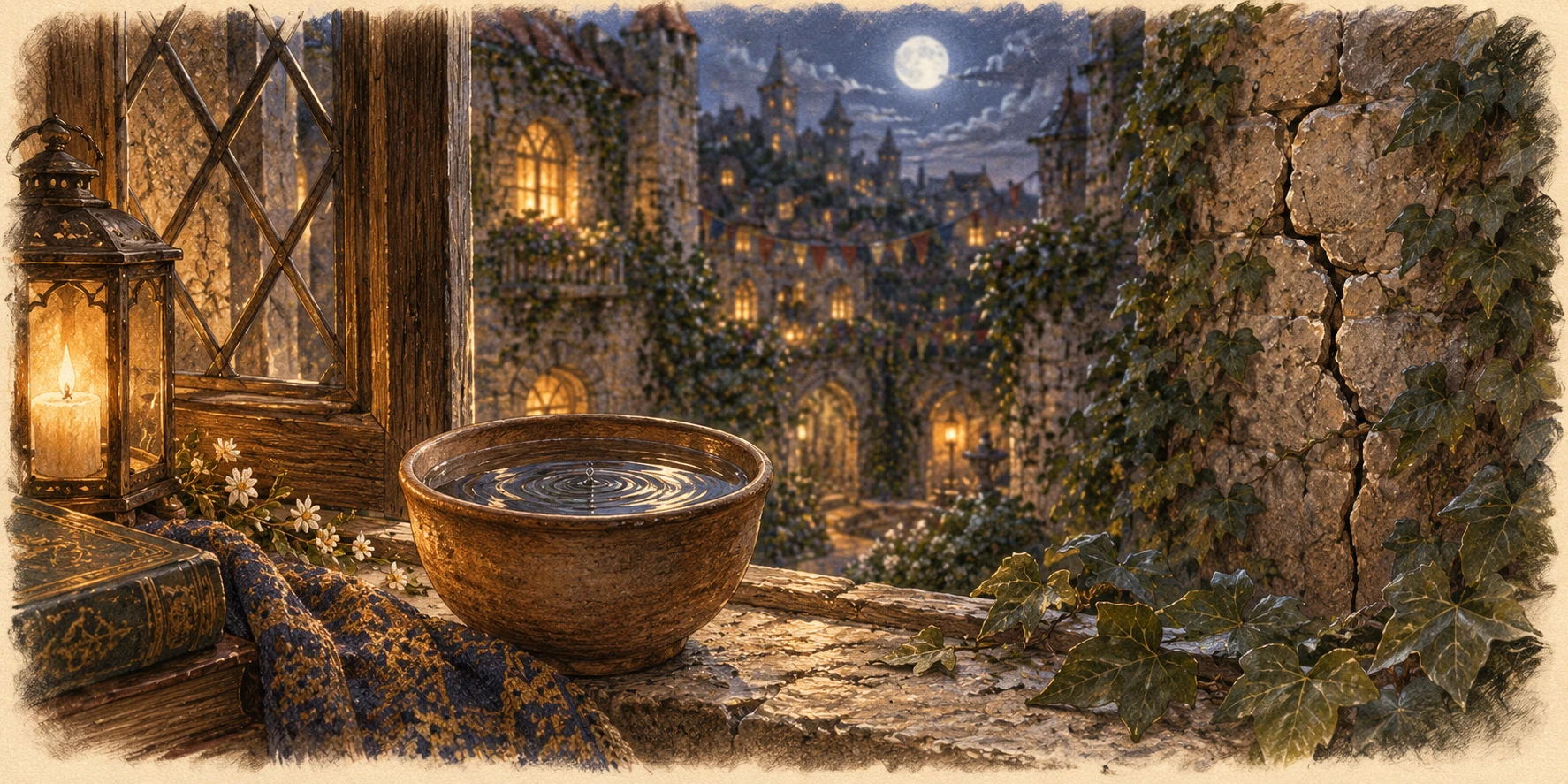
Suddenly, he no longer wanted to argue with them. He thought of the chair his father sat in every day, the tune his mother hummed while brushing her hair, and the cloth rabbit his sister still held tightly after she fell asleep. If the book was right, what would happen to them?
He opened the book at the part about the King and read several more pages, searching for a way to save his family. Could there be a medicine that would wake them from all this noise and excitement? Or a road that would lead them out of the city? But some of the words in the book were still too hard for him to understand.
Early the next morning, he carried his bundle to the waste ground outside the city. Home was behind him. Ahead lay a place he had never been. He stood there for a long time and whispered, “What should I do?”
“Are you looking for a road?” A man came toward him across the waste ground. His shoes were dusty, and he carried a rolled parchment. “My name is Evangelist,” he said.
Chris wanted to answer, but he was too nervous to speak. He was afraid this man would say it too: You’re only a child. You’ve got it wrong again. Evangelist did not hurry him. He simply stopped beside him. After a while, Chris handed him the book and told him, one by one, about the cracks in the city, his parents’ words, and the bundle on his back.
“I want to save them,” he said at last. “But I can’t even undo this.” He tugged at the rope across his shoulder.
Evangelist looked at him. “You need help. So does your family.”
“Will anyone help us?”
Evangelist unrolled the parchment and placed it in his hands. It read: Leave this city before it is destroyed.
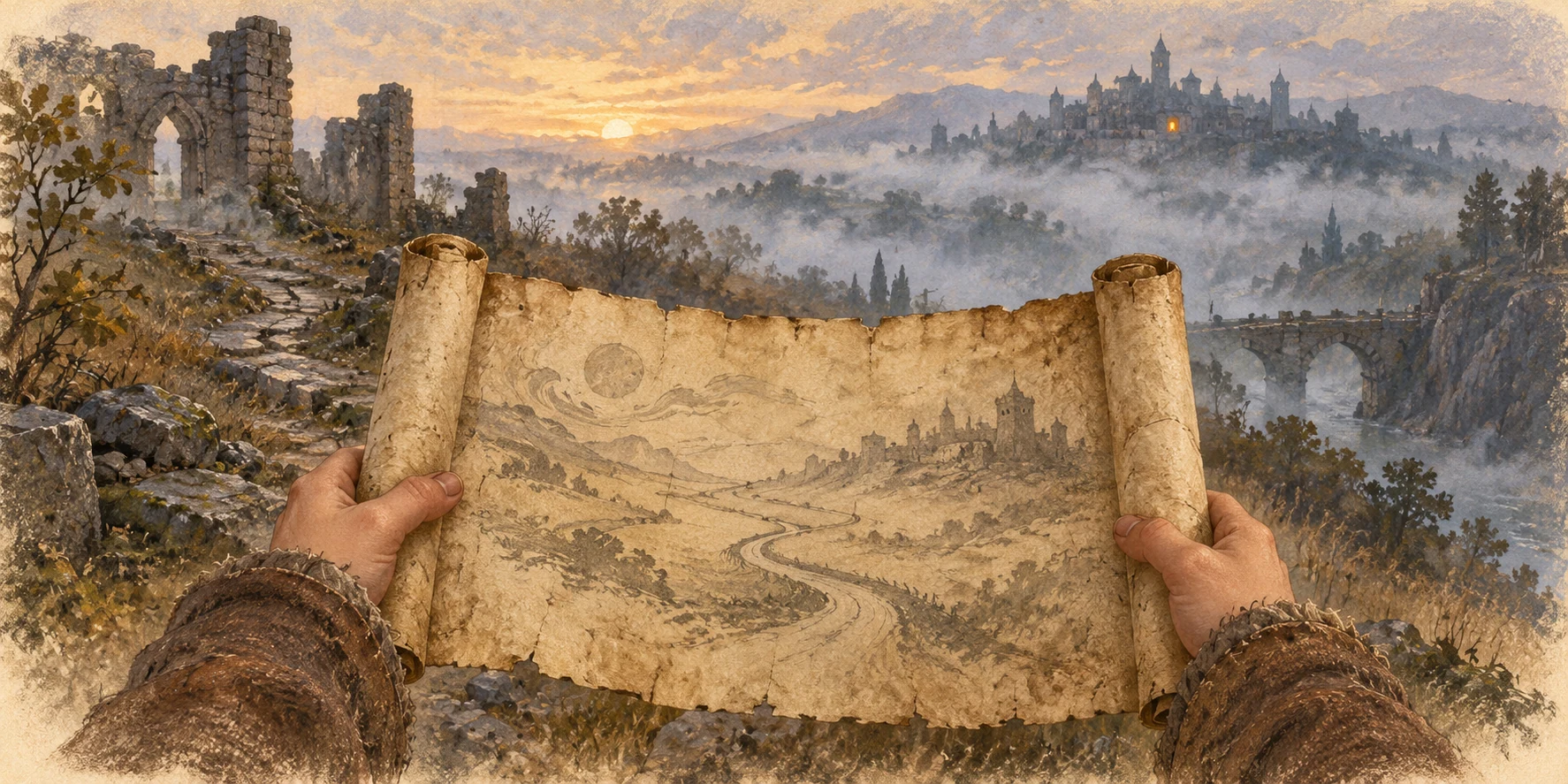
“Can you see the narrow gate in the distance?”
Chris stood on tiptoe. The waste ground stretched a long way, and the morning mist had not yet cleared. He shook his head.
“Then can you see a little light?”
Chris looked again. This time, he saw it. The light was very small, shining far away through the mist. He could not tell whether it was a lamp in a window, but it did not flicker like the lights of the City of Destruction.
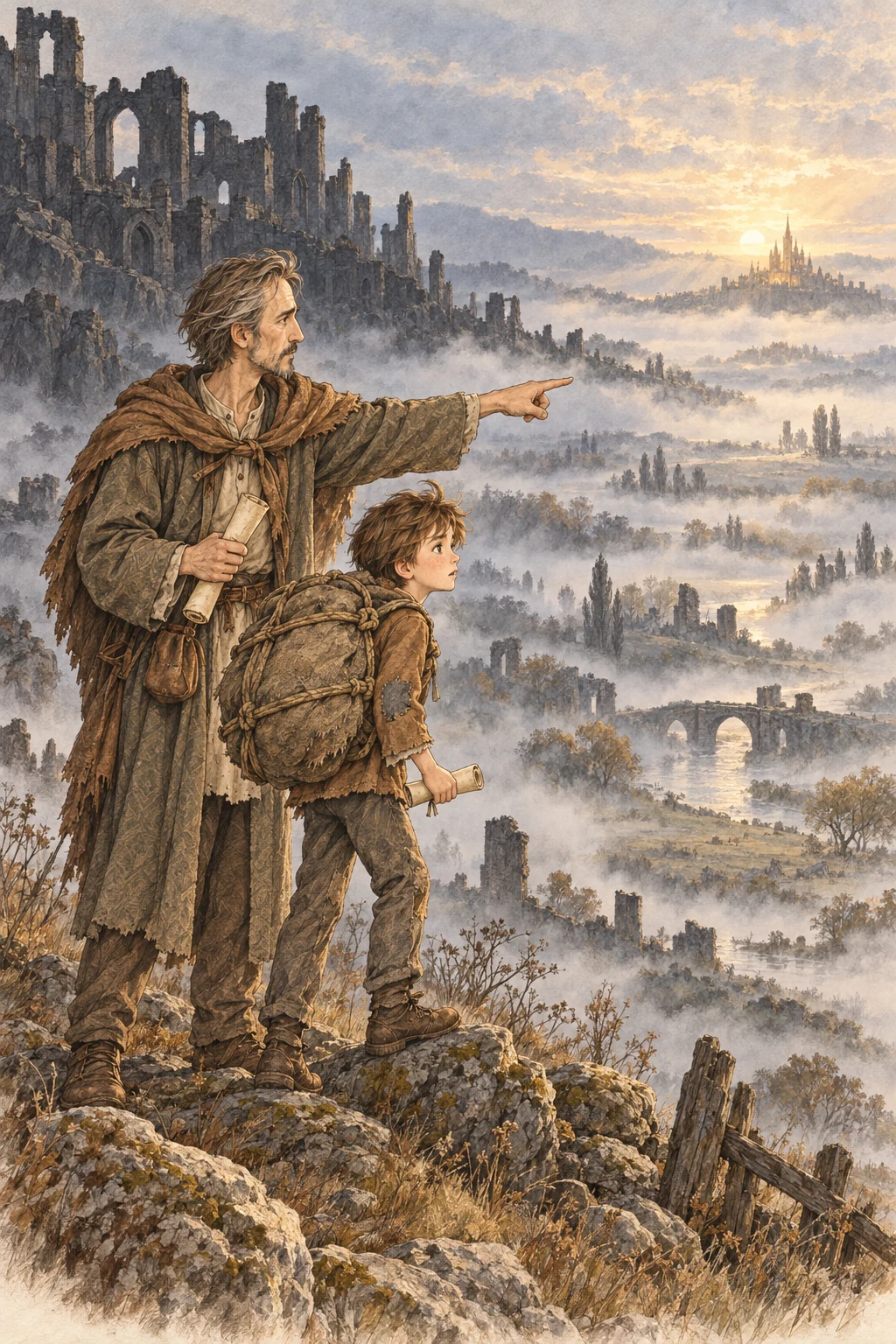
“I can,” he said softly.
“Walk toward that light. You will find the narrow gate. When you get there, knock.”
“Will I find a way to save my family there?”
“There you can begin the road that leads to the Savior.”
Chris put the parchment away and ran home. One last time, he asked his family to come with him. His father told him not to be late for breakfast. His mother was busy arranging flowers from the previous evening’s party in a vase. His sister asked where he was going. He crouched beside her and tied the loose ribbon on her cloth rabbit.
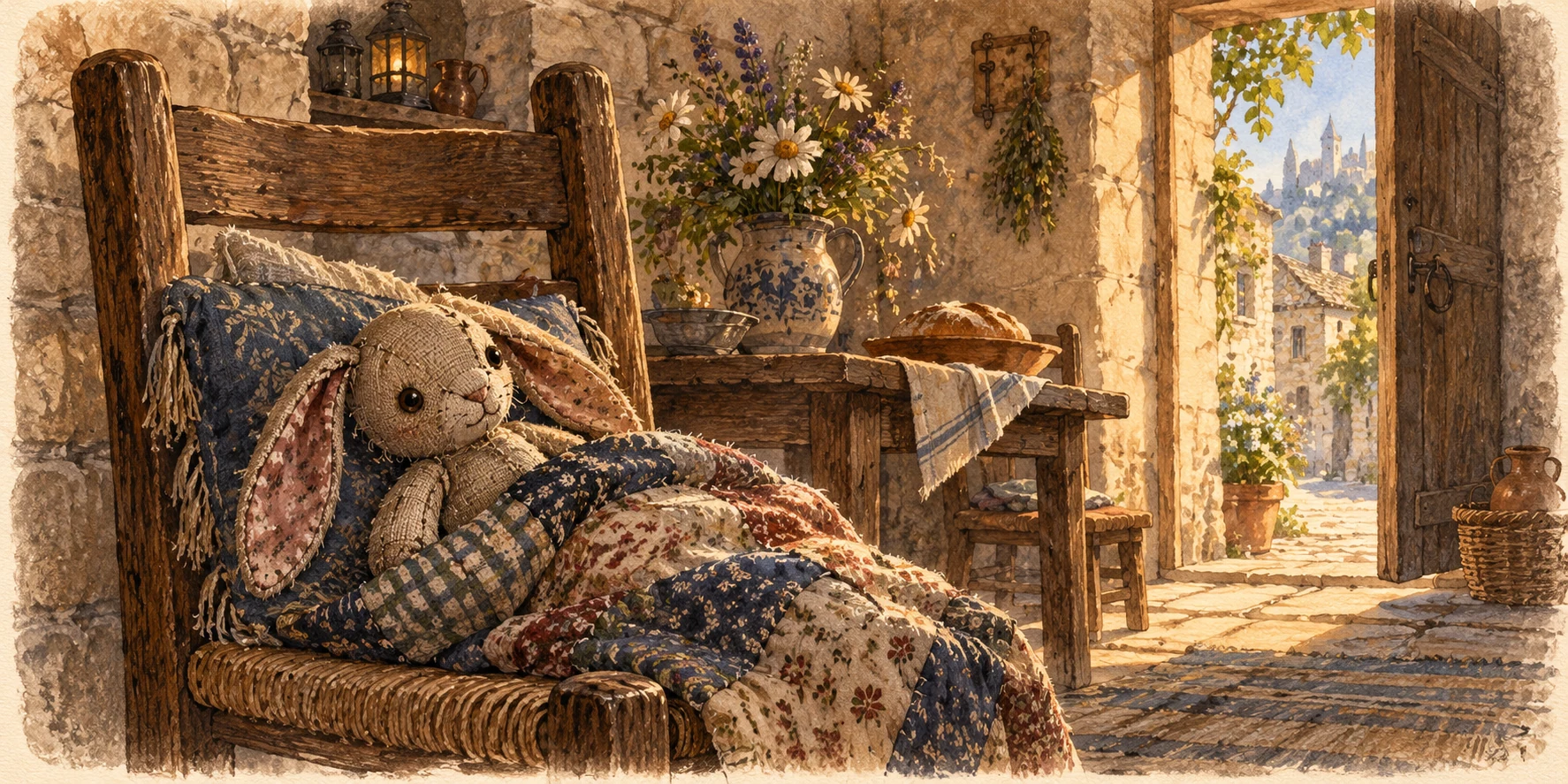
“I’m going to find a road that can save us.” She wanted to ask more, but for the moment he could not find anything else to say.
At the doorway, Chris stopped. The clinking of gold coins sounded at the table again. How he wished his father would look up this time, and his mother would put down the vase and listen until he had finished. He waited a little while. Then he opened the door.
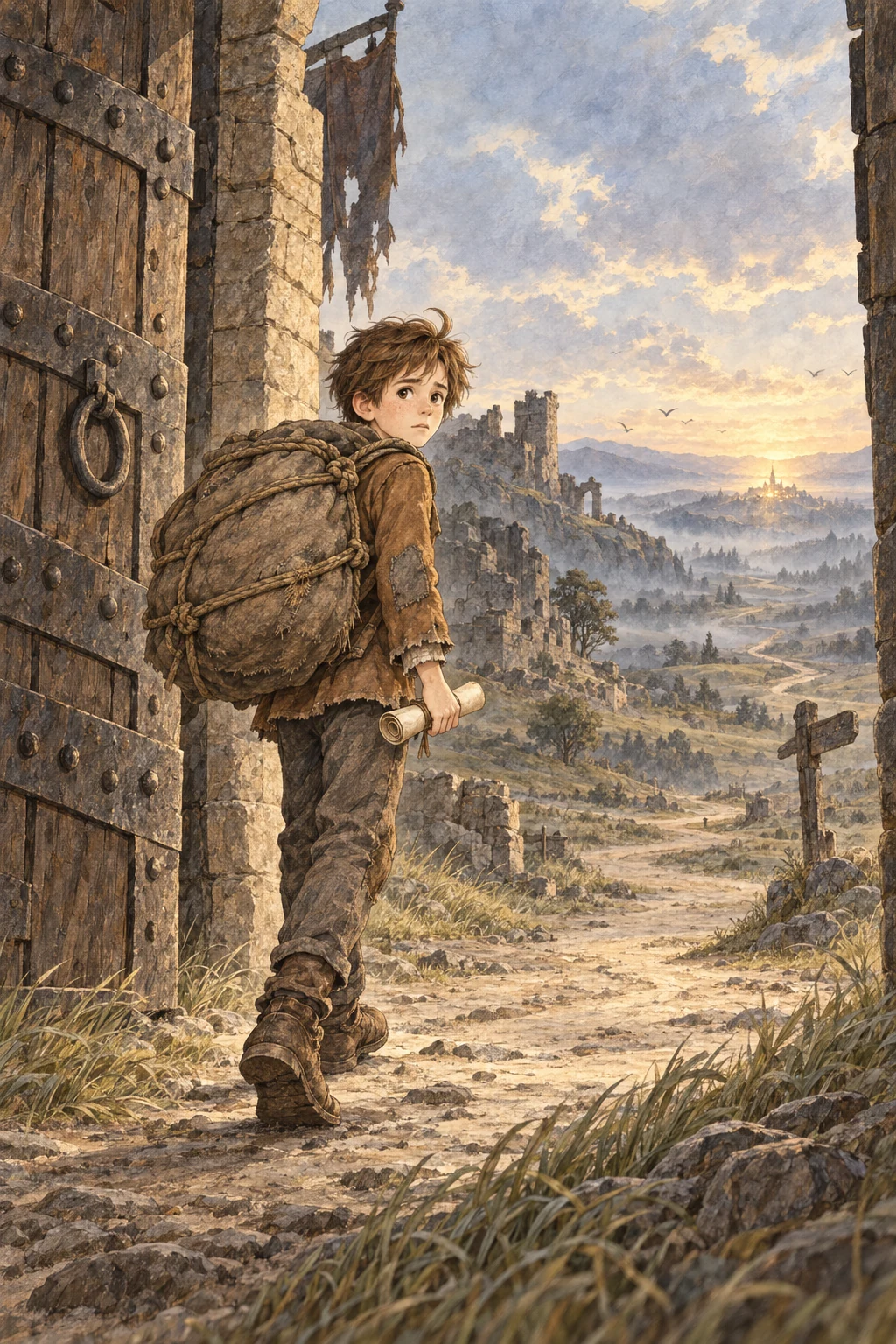
The wind outside the city gate was cool. The bundle on his back was still heavy, and the hand holding the parchment was trembling. Far away, the little light still shone. Chris looked at it, tightened his grip on the parchment, and took his first step.