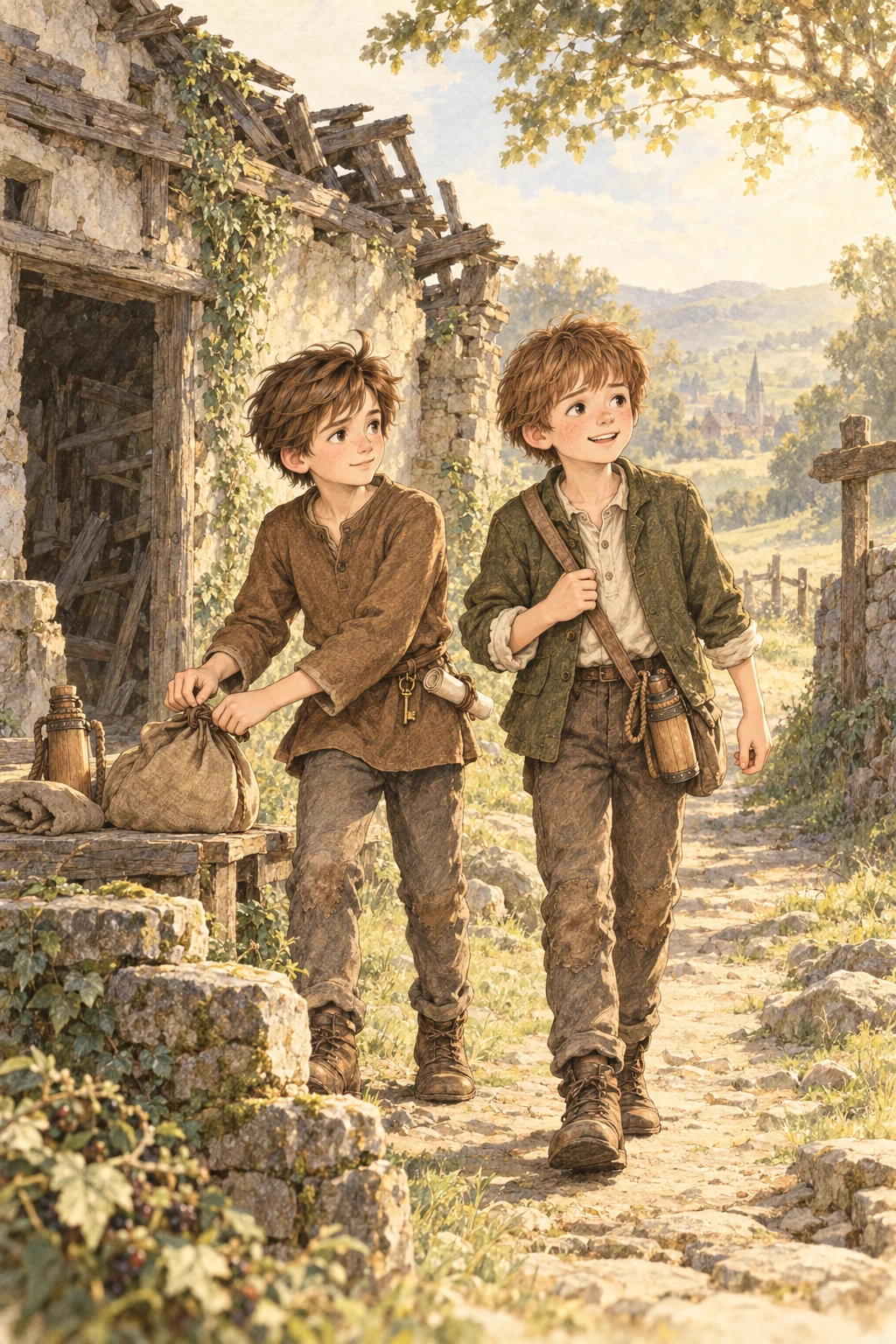
On the day Chris was ready to leave the fair, a boy waited outside the old woman’s door. His name was Hopeful. He was a year older than Chris, with lighter hair, and whenever he smiled, one slightly crooked tooth showed first. But that day, he was not smiling.
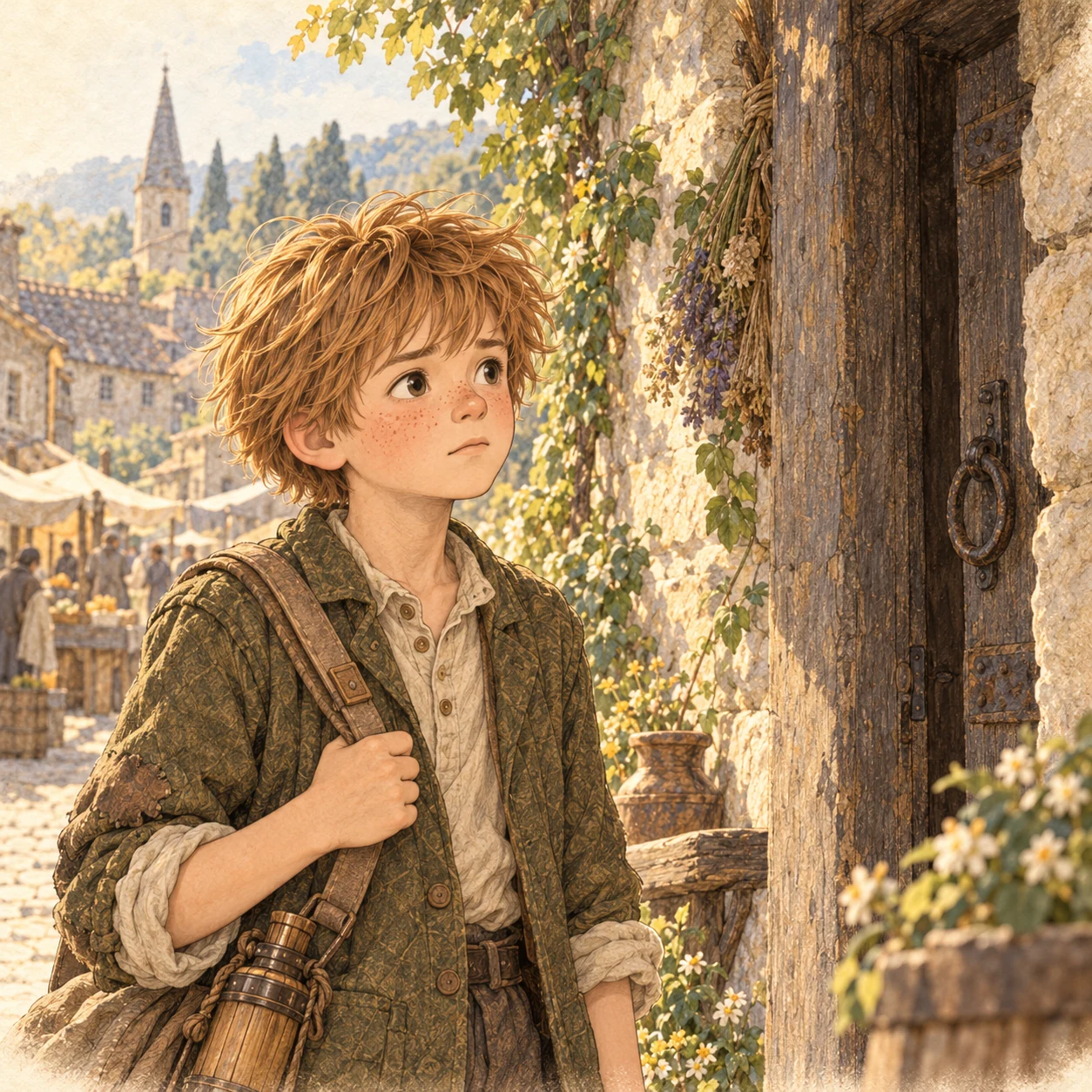
“I want to leave too,” Hopeful said. “I saw how you looked after that child. And I heard what Faithful said at the trial.”
Hopeful had lived at the fair all his life. He knew how to sell things, guess what customers wanted to hear, and make a worthless box sound like a treasure. Once, he had thought that selling anything successfully proved how clever he was. But after Faithful was taken away, the cheerful calls of the sellers no longer sounded so cheerful.
“I haven’t come to tell you not to be sad,” Hopeful said. “I only want to ask whether you’ll let me walk with you.”
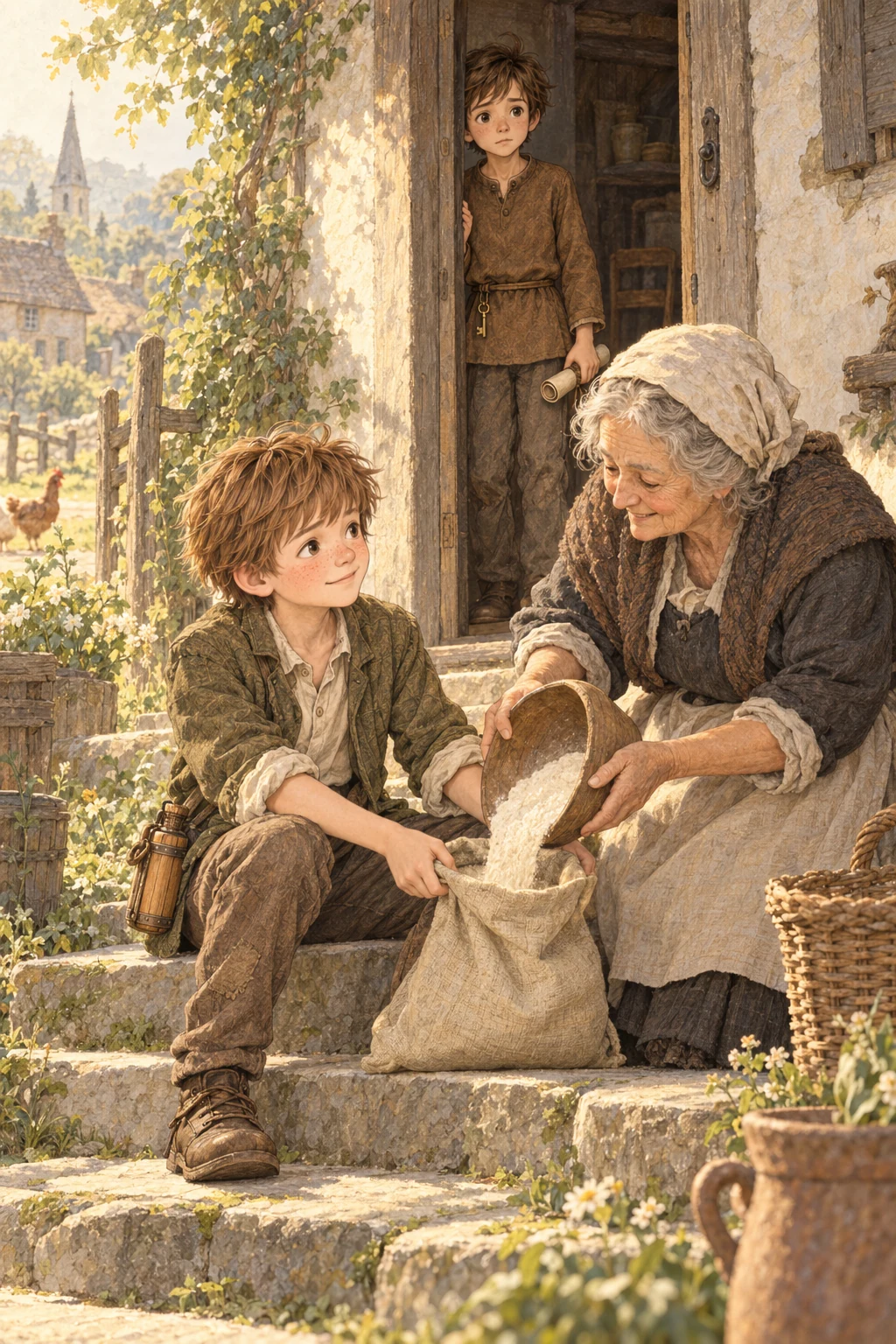
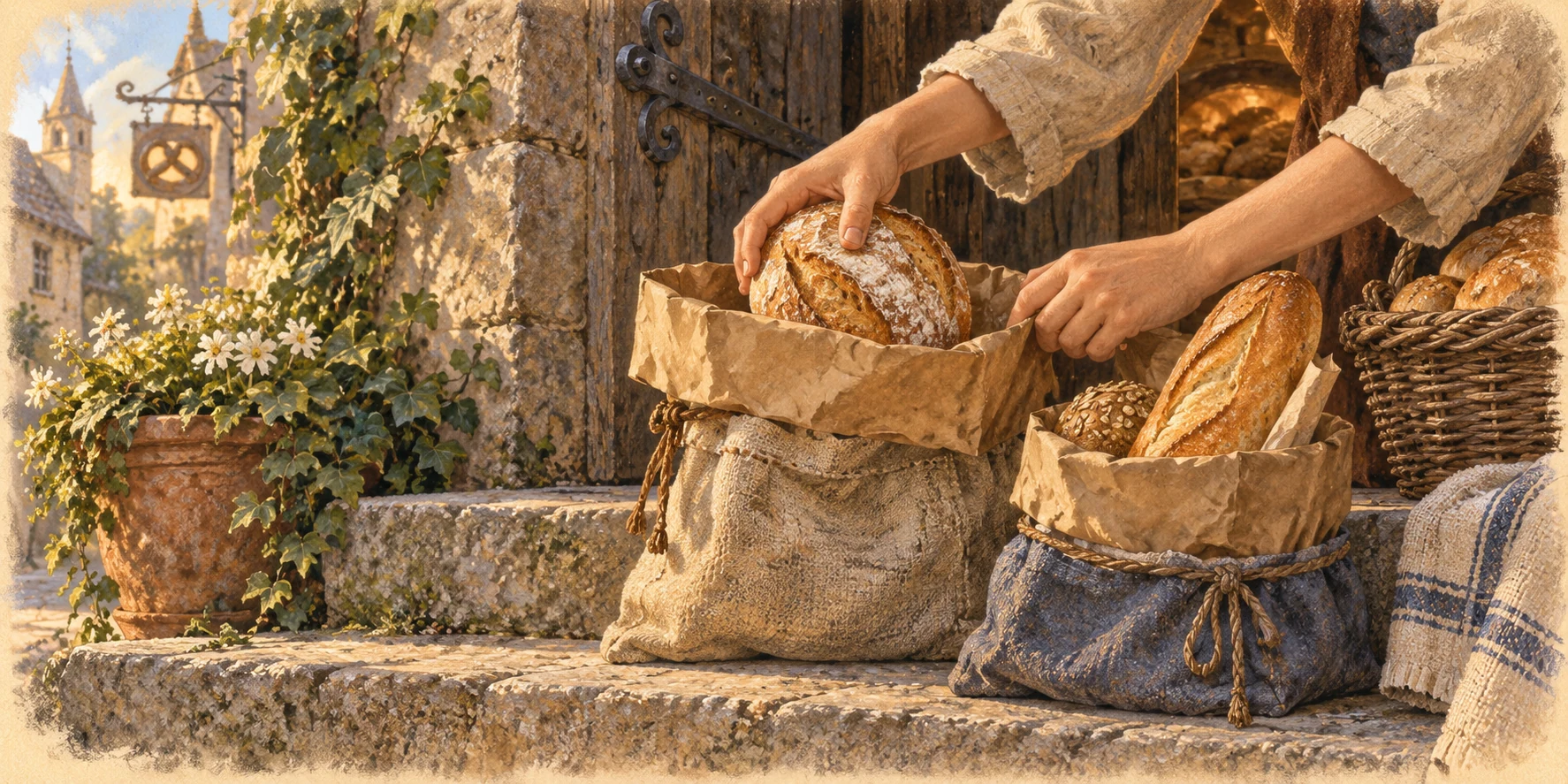
Chris did not agree at once. He was afraid someone else would come close to him and suddenly disappear. So Hopeful sat on the doorstep, helping the old woman pack bread into bags, and waited until Chris came out.
They left the fair, and the sounds beside the road slowly faded. Chris turned back without thinking. Hopeful stopped too. Only after a long while did Chris start walking again. Hopeful did not ask how many more times he would need to look back.
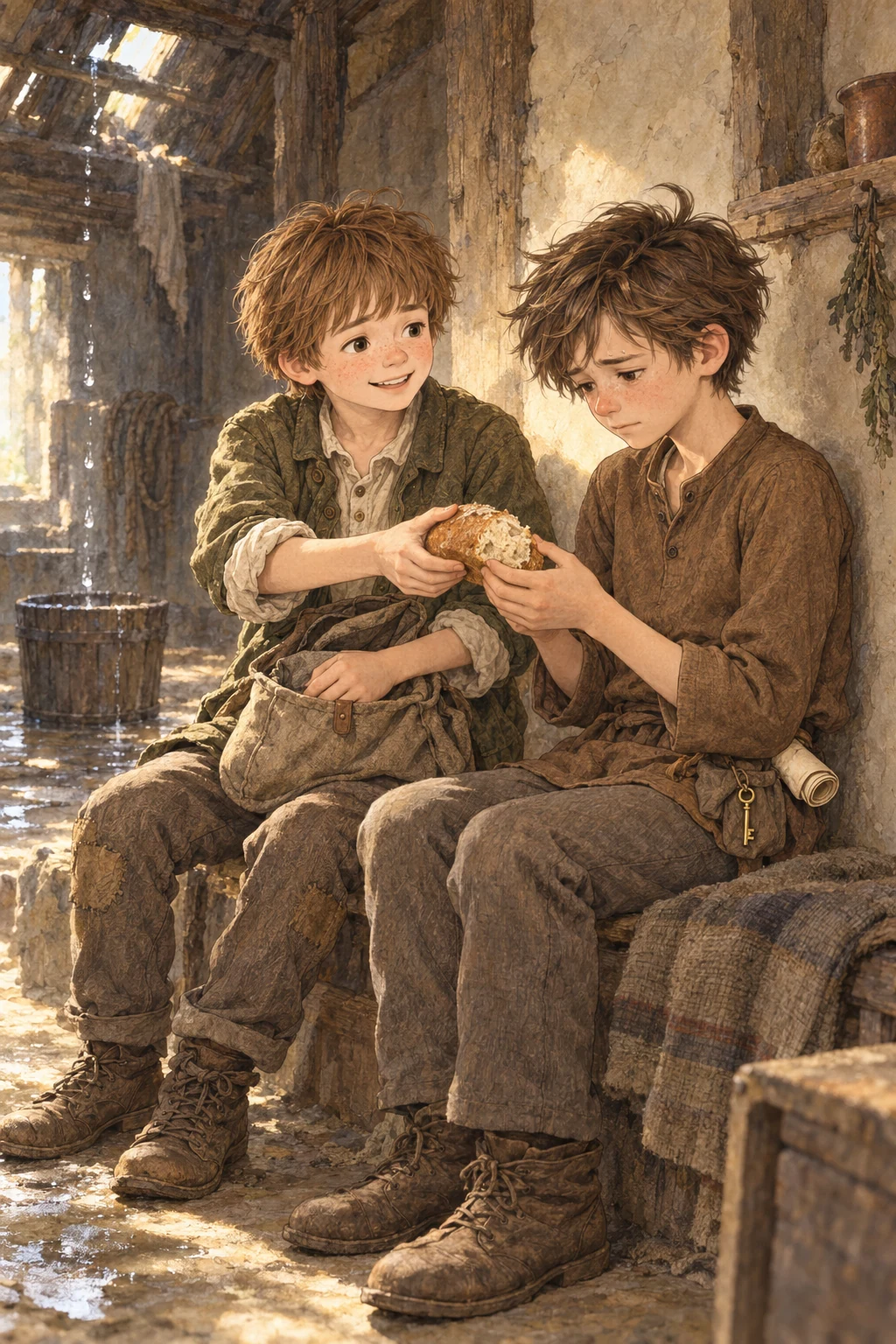
That first night, they sheltered in an abandoned hut. Hoping to make things easier, Hopeful began telling a joke from the fair, but halfway through he noticed Chris was not listening. He stopped, moved them away from the leak in the roof, and sat beside Chris against a drier wall.
“He used to carry food too,” Chris said suddenly.
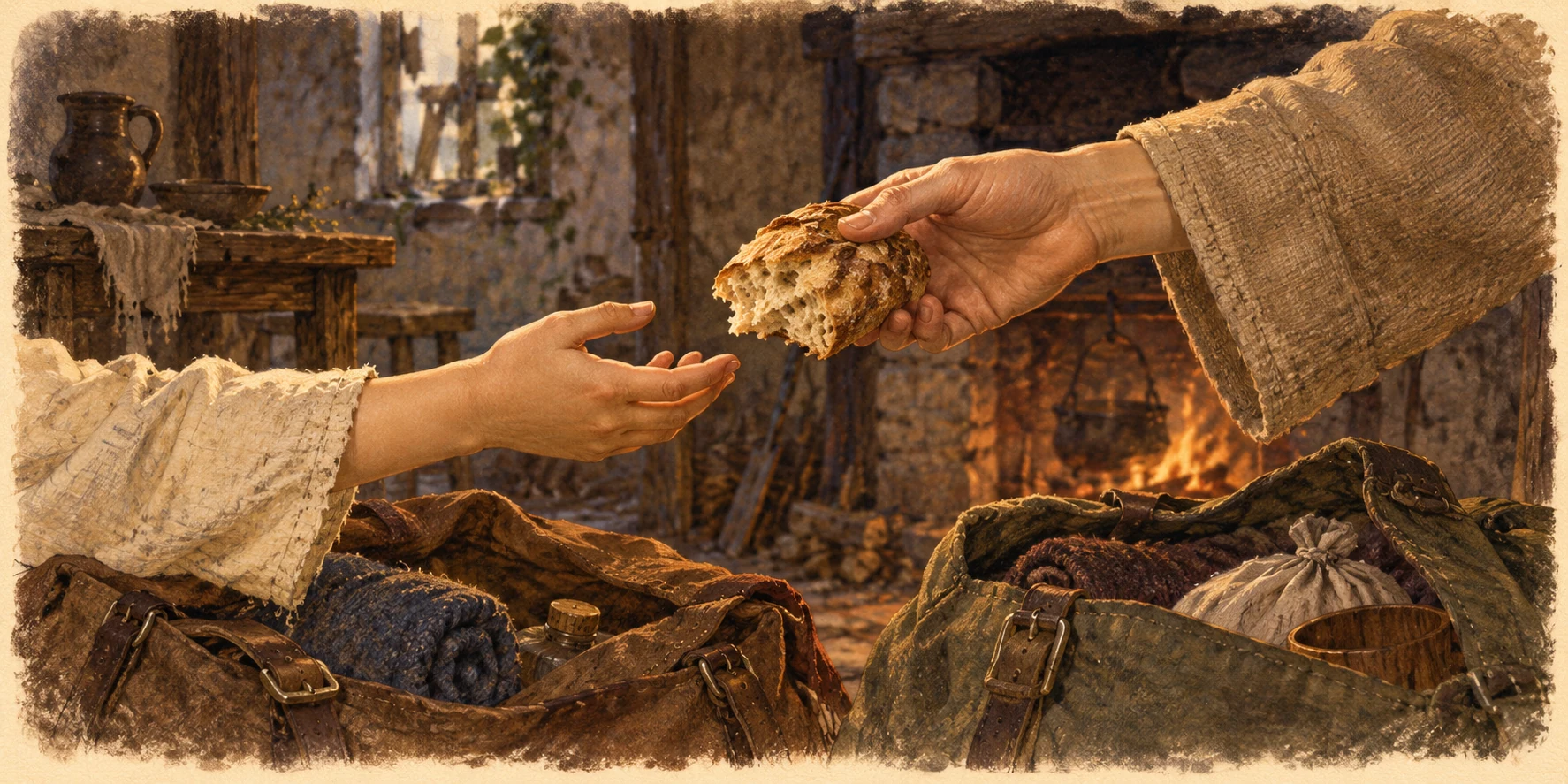
Hopeful did not know how to answer. He opened his own bag. “I’ve still got some.”
It was not the same bag, and it was not the same person. Looking at the offered bread, Chris felt tears coming, but he accepted it. After a few mouthfuls, he began slowly telling Hopeful about Faithful.
Hopeful told Chris about his home too. Before leaving, he had told the uncle who looked after him. His uncle said that earning a steady living at the fair made more sense than trusting a road whose end he could not see. Hopeful did not know whether he would ever persuade him. But he no longer wanted to make money by telling lies.
The next day, they packed their waterskins together. “Why are you called Hopeful?” Chris asked.
“My mother chose it.” At last the boy gave a small smile. “But I’m not full of hope every day. Sometimes I only have enough to reach the next place.”
Chris put the last piece of cake into the bag and tied the string around it. “Then let’s get there first,” he said. This time they stood up together, and neither hurried the other.